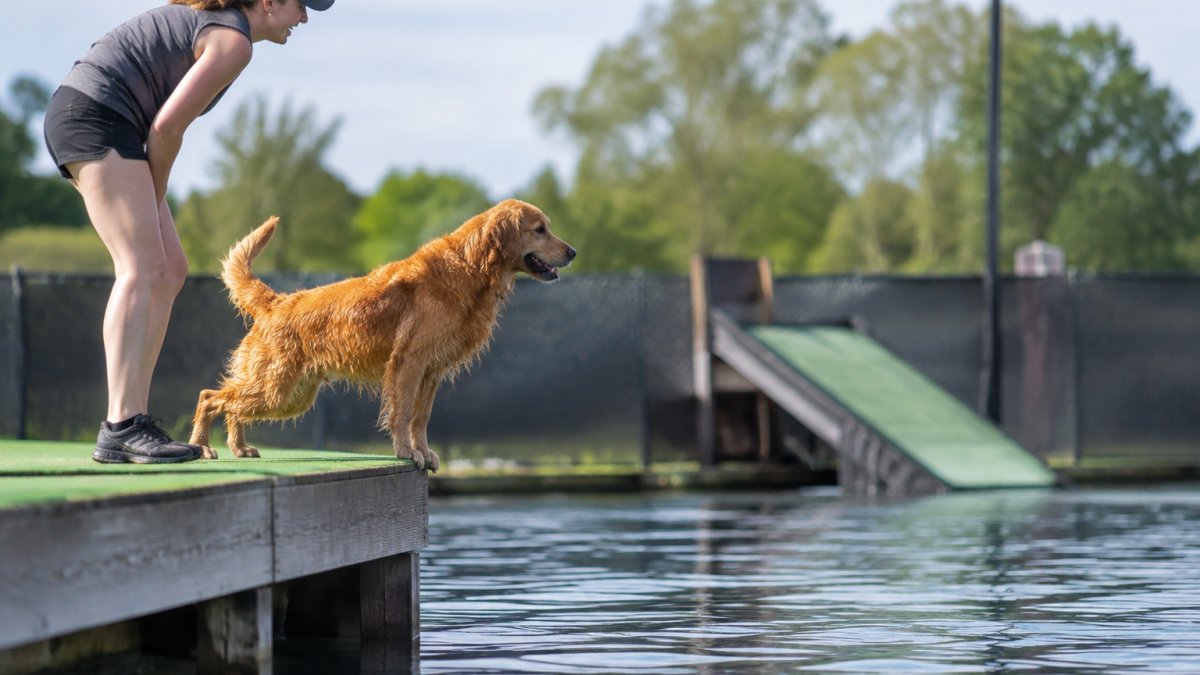
 How-to
How to Help Your Dog Gain Dock Confidence
Last Updated: November 23, 2026
Quick Summary
You build dock confidence by introducing dock diving in stages: a dry, stable dock, then a ramp into shallow water, then short swims, and only then the jump. Short, repeatable exercises that reward each step toward the water work better than one big push, and you should never force a dog off the dock.
- Walk the full dock on leash, rewarding every few steps.
- Guide the dog down a ramp into shallow water and reward at the bottom.
- A tucked tail, stiff posture, or refusal to move forward means slow down.
- Never force a dog off the dock; forced exposure can set training back weeks.
- Puppies should wait until their growth plates close before high-impact work.
Table of Contents
- How to Introduce a Dog to Dock Diving
- Dock Diving Confidence Exercises for a Dog Afraid to Jump Off Dock
- Dock Diving Safety for Dogs: Readiness Checks and When to Stop
- Frequently Asked Questions
How to Introduce a Dog to Dock Diving
Dock confidence starts before your dog sees the water. Successful dogs often share one trait: a handler who let them set the pace. Introduce dock diving in stages: a dry, stable dock, then a ramp into shallow water, then short swims, and only then the jump.
Dock Diving Confidence Exercises for a Dog Afraid to Jump Off Dock
A dog afraid to jump needs small wins, not a big push. Build confidence through short, repeatable exercises that reward each step toward the water.
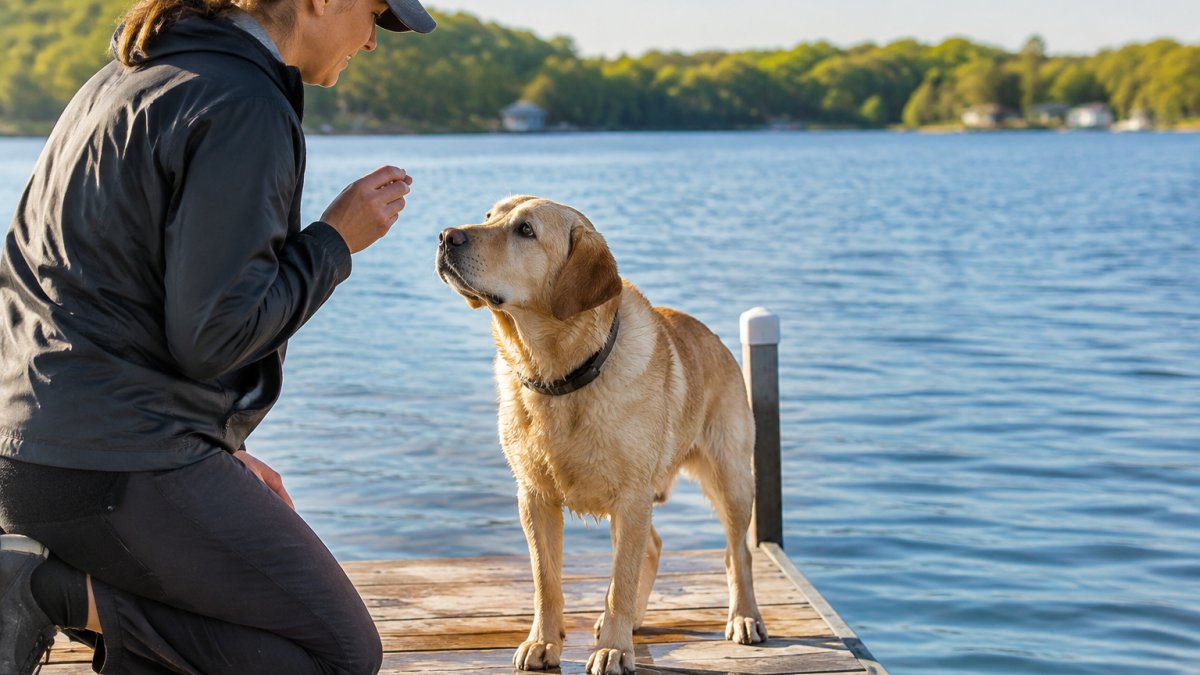
- Dry dock walk. Walk the full dock on leash, rewarding every few steps.
- Edge sniff. Let the dog look over the edge, treat, then walk away.
- Ramp entry. Guide the dog down a ramp into shallow water and reward at the bottom.
- Short swim. Let the dog swim out and back once, keeping it brief.
- Toy toss. Toss a toy a short distance and let the dog choose to go.
- Low jump. Encourage a jump from a low point, never a high one.
Watch body language: a tucked tail, stiff posture, or refusal to move forward means slow down, that is information, not disobedience. Never force a dog off the dock; forced exposure builds fear and can set training back weeks.
Build confidence with these short, repeatable exercises, moving through them at your dog's pace.
| Exercise | What to do |
|---|---|
| Dry dock walk | Walk the full dock on leash, rewarding every few steps |
| Edge sniff | Let the dog look over the edge, treat, then walk away |
| Ramp entry | Guide the dog down a ramp into shallow water, reward at the bottom |
| Short swim | Let the dog swim out and back once, keeping it brief |
| Toy toss | Toss a toy a short distance and let the dog choose to go |
| Low jump | Encourage a jump from a low point, never a high one |
Dock Diving Safety for Dogs: Readiness Checks and When to Stop
Safety comes before progress. Before every session, confirm the dog can swim and exit without help, is healthy with no joint or heart concerns, has clear water and a stable entry point, shows relaxed body language on the dock, and gets rest breaks. Troubleshoot hesitation directly: a dog who balks at the edge may need more ramp practice, one who panics in the water may need shorter swims, and one who shuts down in a crowd may need a quieter session. Age, breed, and health shape the timeline, senior dogs and dogs with prior injuries need a gentler path, low-impact conditioning can help build fitness before jumping, and puppies should wait until their growth plates close before high-impact work. When in doubt, stop and ask a qualified trainer.
Dock confidence is built one calm step at a time, and the right facility makes that path easier. At The Gated Dock, LLC, our certified trainers guide dogs from first dock exposure through confident jumps, using our year-round indoor pool and regulation-sized docks. We offer specialized therapy swims for older or post-operative dogs, plus instruction for DockDogs, NADD, and UAD disciplines. Get started with The Gated Dock, LLC and help your dog find its next adventure.
Frequently Asked Questions
How can I help a fearful dog gain confidence on a dock?
Start by observing your dog's body language for stress signals like tucked tail, ears back, or lip licking. Build trust with low-intensity exposure: let your dog explore the dock at their own pace without forcing interaction. Pair each small step with treats or play to create positive associations. Use gradual exposure, rewarding calm behavior. If your dog remains fearful, consult a professional trainer experienced in dock diving confidence exercises.
Why is my dog afraid to jump off the dock?
Fear of jumping off a dock often stems from unfamiliarity with the height, water movement, or slippery surface. Past negative experiences or lack of early socialization can also play a role. Dogs may show anxiety through avoidance, trembling, or barking. To address this, use dock diving confidence exercises that include gradual exposure to the dock and water, reward-based training, and never force your dog to jump. Patience and positive reinforcement are key.
What should I do if my dog refuses to jump into the water?
If your dog refuses to jump, do not push or throw them in. Instead, go back to easier steps: practice on a ramp or shallow water, use a favorite toy or treat to lure them, and reward any approach toward the water. Try dock diving safety for dogs by checking water conditions and using a life vest. If progress stalls, seek help from a certified trainer who can assess your dog's readiness and tailor a plan.
